
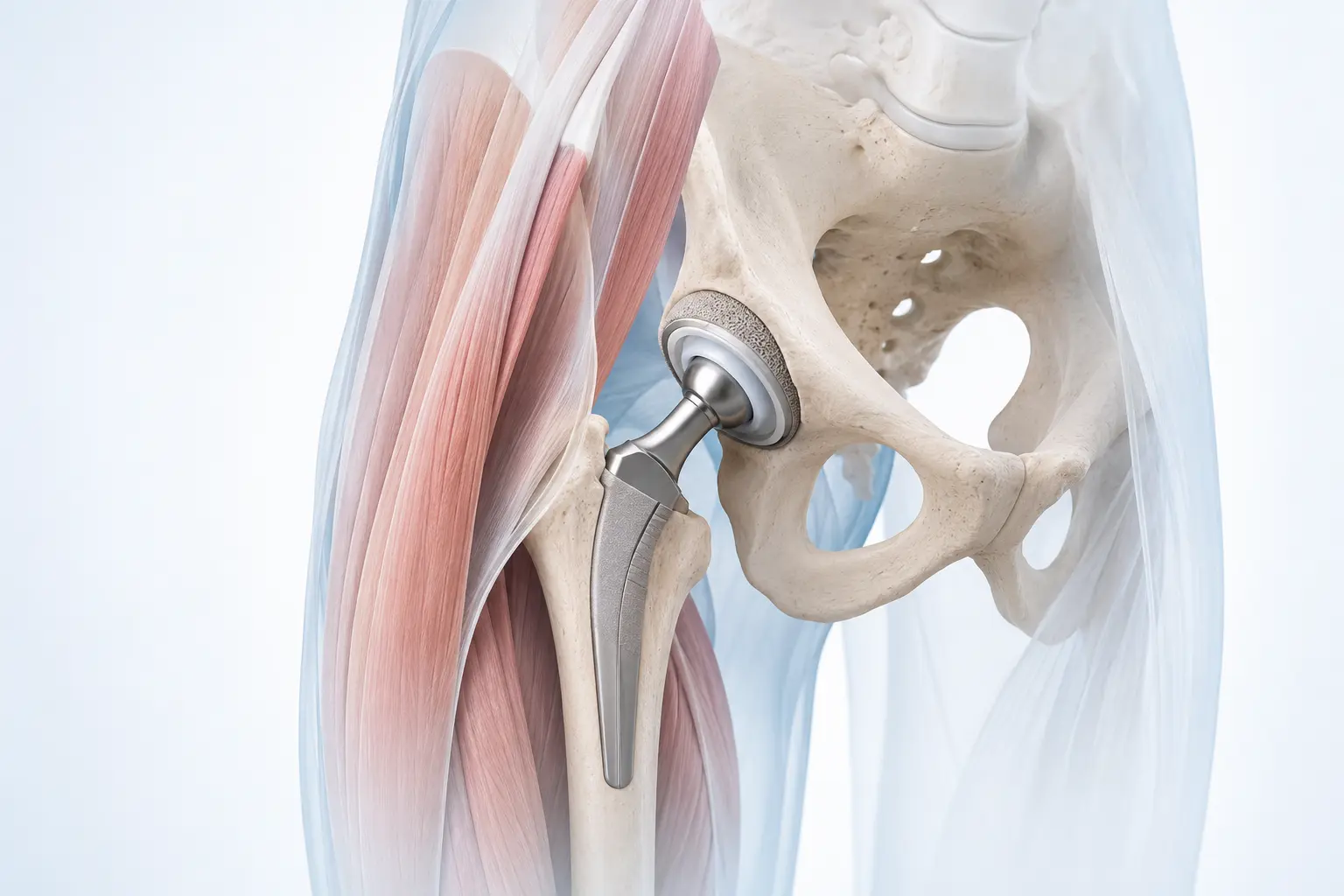
What is different about the anterior approach?
With the direct anterior approach, the surgeon reaches the joint through an incision at the front of the hip and works between muscle groups rather than detaching the posterior muscle group. It is often described as muscle-sparing, although tissues are still moved and stretched and no operation is entirely free of tissue trauma.
The patient lies on the back during surgery. In some settings, real-time imaging can be used to help assess component position, leg length and joint stability.
What are the potential benefits?
Comparative studies have found less pain and faster functional improvement during the first weeks in some patients, sometimes with a shorter hospital stay. These differences usually become smaller over time, and long-term outcomes of established approaches are generally similar when surgery is performed well.
Another potential benefit is avoiding direct disruption of the posterior hip muscles. This may allow a more comfortable early movement protocol, although the exact instructions depend on the patient, bone quality and the findings during surgery.
Is the approach suitable for everyone?
Many patients are suitable for an anterior approach, but the choice depends on body anatomy, hip deformity, previous surgery, bone quality, reconstruction complexity and the surgeon’s experience. In particularly complex cases, another approach may provide safer and more accurate exposure.
The approach does not replace careful implant sizing and positioning, restoration of leg length, joint stability and complication prevention. It is therefore useful to ask not only which approach will be used, but also how the operation is planned and how experienced the surgeon is with the selected technique.
What are the risks and what does recovery involve?
General risks are similar to those of any hip replacement and include infection, blood clots, fracture, dislocation, leg-length difference and injury to nerves or blood vessels. With the anterior approach, numbness or burning over the outer thigh can occur from irritation of a nearby sensory nerve; in many cases this improves with time.
Most patients begin standing and walking soon after surgery, using a walker or cane as needed. Progress is individual and depends on muscle strength, balance, general health and the extent of the operation.
The anterior approach may support early recovery, but the most important objective remains an accurate, stable and safe hip replacement tailored to the patient.
This article provides general information and does not replace an examination, diagnosis or individual medical advice. Treatment is tailored to the patient’s condition, examination and imaging.