What does an orthopedic oncologist do?
The field includes diagnosis and treatment of benign and malignant tumors of bone and soft tissue, as well as bone metastases and pathological fractures. Not every lump or painful area is malignant, but a growing mass, persistent or night pain, a fracture without major trauma or an unusual imaging finding should be investigated appropriately.
Planning is multidisciplinary and may involve radiology, pathology, medical and radiation oncology, plastic surgery and rehabilitation. Biopsy must be planned as part of the future operation; when sarcoma is suspected, assessment in an experienced center before any excision is recommended.
What is limb-sparing surgery?
Limb-sparing surgery removes the tumor with a margin of healthy tissue without amputating the limb. Oncologic safety comes first: this strategy is chosen only when an appropriate resection and a useful limb can be achieved. Removal may leave a large defect involving bone, joint, muscle or soft tissue that must then be reconstructed.
Reconstruction may use an oncologic prosthesis, donor bone, the patient’s own bone, a nail or plate with bone cement, or a combination of methods. The choice depends on tumor location, defect size, age, planned cancer treatment and functional goals.
How can 3D planning help?
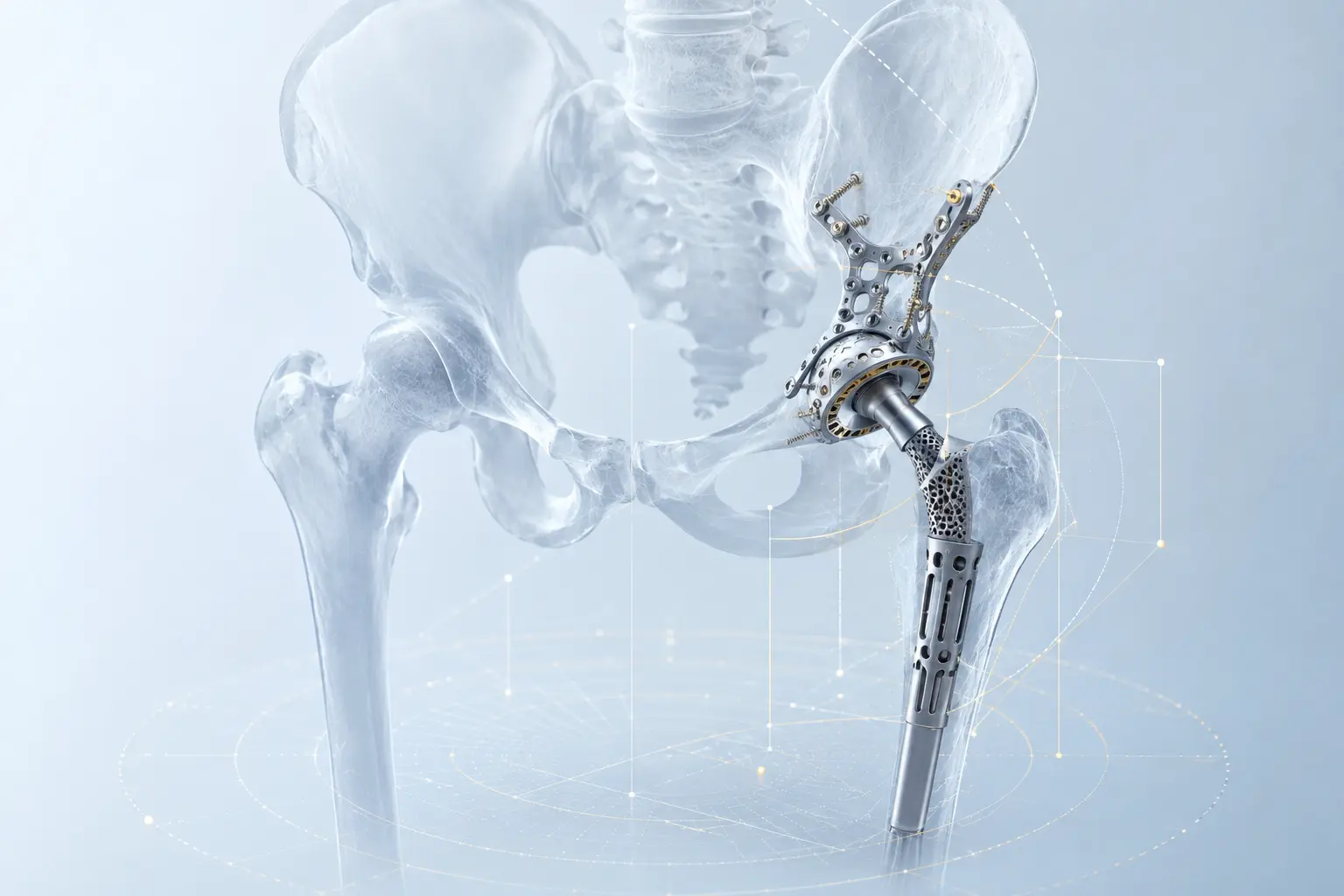
In complex cases—especially in the pelvis or close to a joint—a 3D model can be created from CT and MRI. This helps plan resection margins, cutting angles and reconstruction. Patient-specific cutting guides or a 3D-printed implant matching the anatomy and expected defect may also be produced.
The potential advantage is improved anatomical fit and precision in areas where standard implants are insufficient. These technologies require planning and manufacturing time, an experienced team and quality control, and long-term evidence for some newer solutions is still developing.
What does recovery involve?
Recovery depends on the extent of resection and type of reconstruction. Weight-bearing may need to be restricted, and a brace or prolonged physiotherapy program may be required. Patients receiving chemotherapy or radiotherapy need close coordination to reduce infection, wound-healing and functional complications.
After treatment, oncologic and imaging follow-up is used to detect local recurrence or distant disease, while the reconstruction is monitored for stability. Care does not end in the operating room: rehabilitation, pain management and psychological support are integral parts of treatment.
Complex oncologic reconstruction requires two plans at the same time: how to remove the tumor safely, and how to rebuild the bone and limb after resection.
This article provides general information and does not replace an examination, diagnosis or individual medical advice. Treatment is tailored to the patient’s condition, examination and imaging.