
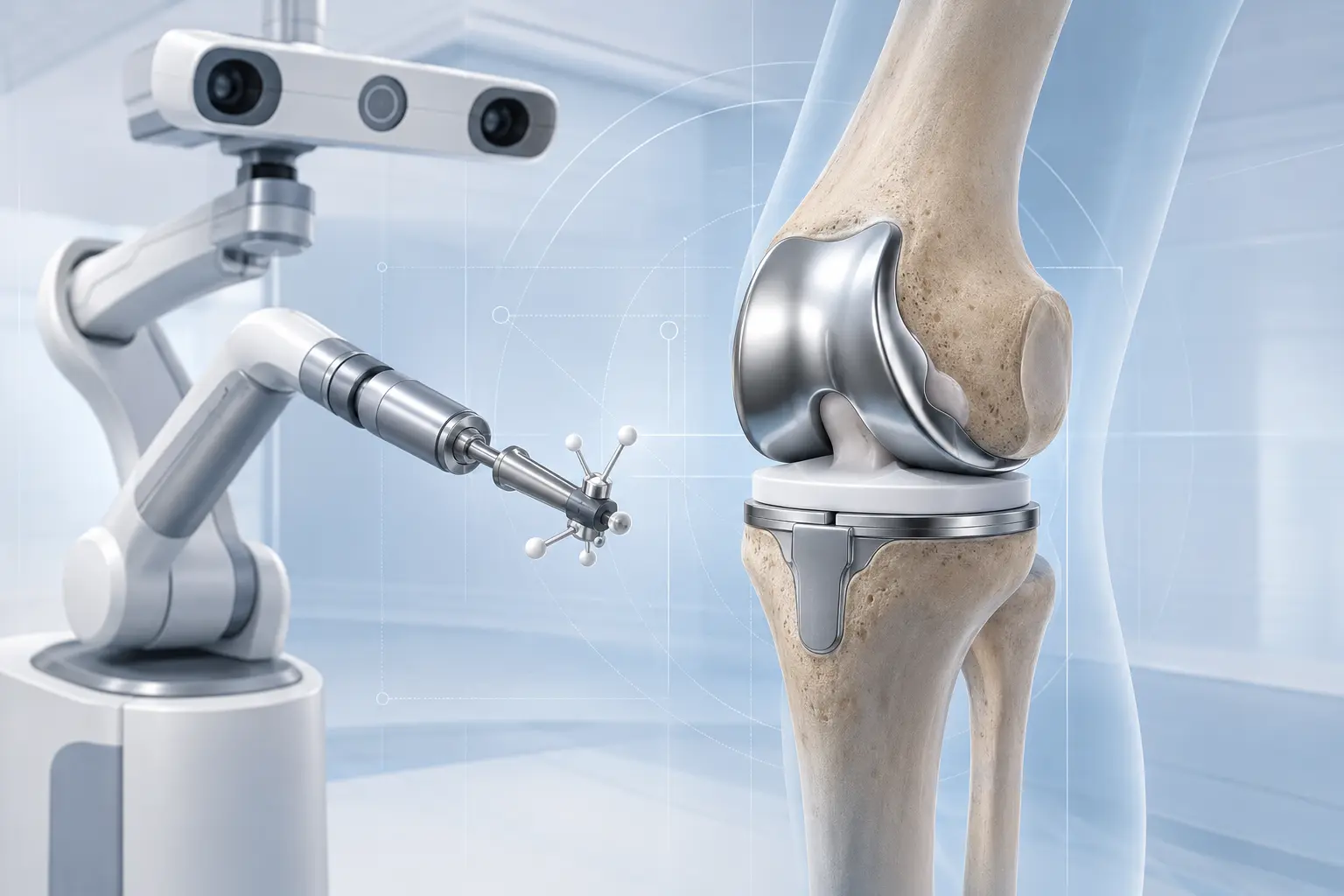
How does the robot assist surgery?
A model of the knee is created from a preoperative CT scan or from mapping performed in the operating room, depending on the system. The surgeon plans component size and position, limb alignment and the amount of bone to remove. During surgery, the system provides information about ligament tension and balance between the inner and outer sides of the knee.
After the surgeon approves the plan, a robotic arm or instrument helps make the bone cuts within the defined boundaries. The surgeon remains in full control and can adjust the plan according to real-time findings.
What are the potential benefits?
The best-established advantage is greater accuracy in reproducing the surgical plan and reducing outliers in component position and limb alignment. Assessing ligament tension before bone cuts may also support patient-specific balancing and reduce the need for extensive soft-tissue releases in selected cases.
Some studies report less pain or better early recovery, but results are not uniform. Outcome is also influenced by the surgeon’s experience, implant design, pain management, physiotherapy and patient characteristics.
What does the evidence show?
Meta-analyses of randomized studies have shown improved anatomical and mechanical accuracy compared with conventional surgery, but no consistent advantage in clinical scores, function or complication rates. Longer follow-up is still needed to determine whether the added accuracy improves implant longevity.
Robotics should therefore be viewed as an advanced tool that expands planning and control, not as a guarantee of a perfect result. The usual risks of knee replacement still apply, including infection, blood clots, stiffness, persistent pain, fracture and the possibility of revision surgery.
Who may be suitable?
Most patients who are candidates for knee replacement because of advanced arthritis may also be candidates for robotic-assisted surgery. Suitability is determined after examination and imaging, taking into account deformity, previous operations, ligament condition and bone anatomy.
The principal value of robotics is more accurate and consistent planning and execution, while the medical decisions and responsibility for the operation remain with the surgeon.
This article provides general information and does not replace an examination, diagnosis or individual medical advice. Treatment is tailored to the patient’s condition, examination and imaging.