
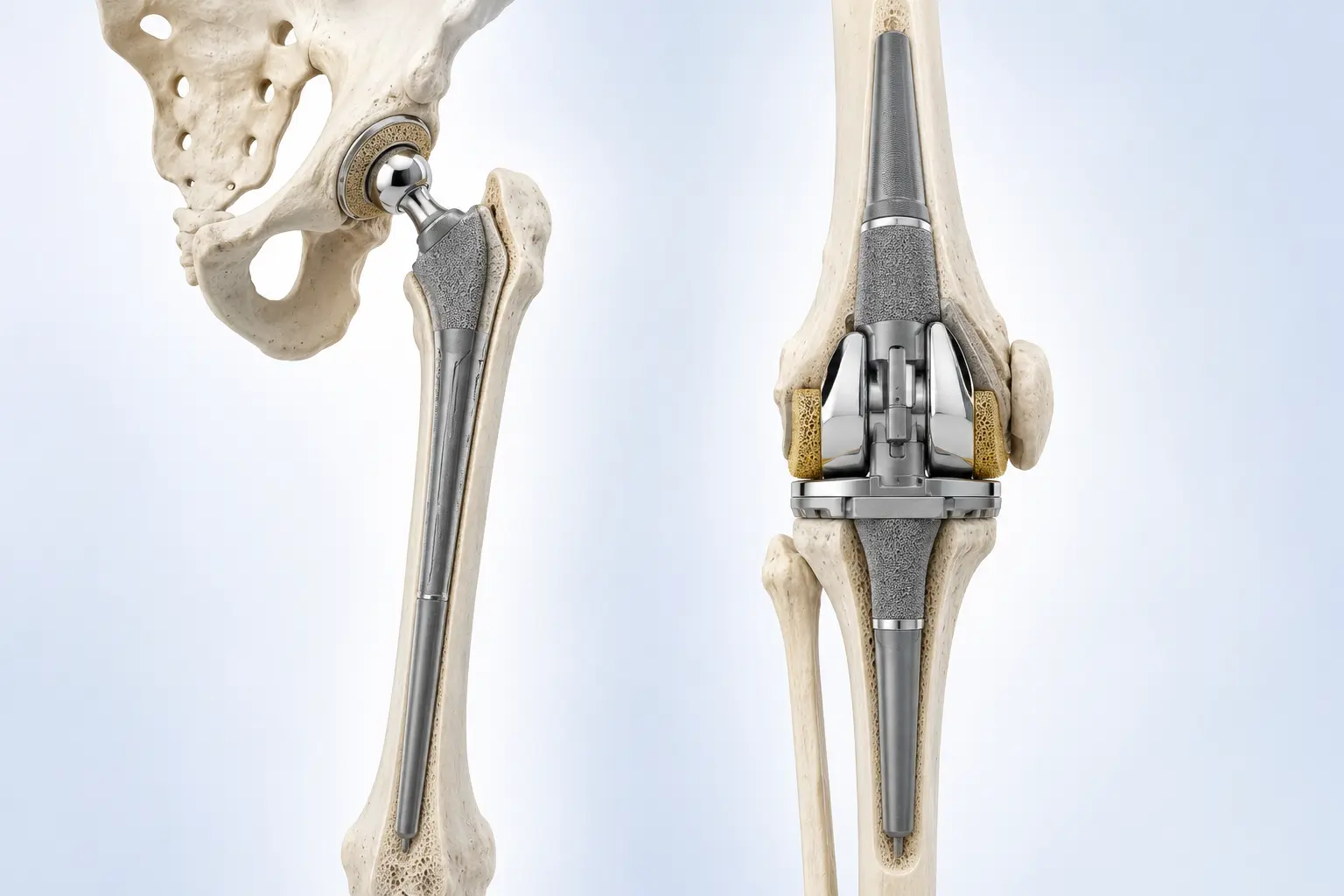
Why can an artificial joint fail?
Common causes include implant loosening or wear, infection around the joint, instability or recurrent dislocation, stiffness, fracture around the implant, component malposition and bone loss. Reactions to wear debris or metal may occur, and sometimes pain originates outside the replaced joint, so other causes must also be considered.
Possible symptoms include new or worsening pain, swelling, reduced movement, a feeling that the knee gives way, hip dislocation, limping or increasing difficulty walking. Fever, wound drainage or sudden pain after a fall requires prompt assessment.
How is the problem diagnosed?
Evaluation begins with a detailed history: when the original operation was performed, how symptoms changed, and whether there were infections, falls or additional procedures. Physical examination and X-rays form the foundation. CT, nuclear imaging or specialized MRI may be added when appropriate.
It is particularly important to rule out infection before revision surgery. Blood tests and aspiration of joint fluid for cell count and cultures may be required. The diagnosis determines whether one component can be revised or whether a complete reconstruction and staged treatment are needed.
What does revision surgery involve?
Damaged components are carefully removed while preserving as much bone as possible. Bone defects may then be reconstructed with bone graft, metal augments, cones or sleeves, longer stems or, occasionally, a custom implant. When ligaments or bone are compromised, an implant with greater constraint may be required.
Several strategies are available for infection around an implant: debridement with exchange of mobile components in selected cases, one-stage revision, or two-stage revision with an antibiotic spacer. The choice depends on the duration of infection, organism, soft-tissue condition and the patient’s health.
What should patients expect after surgery?
Recovery after revision surgery is usually longer than after primary replacement. Weight-bearing or movement may be restricted, and care includes blood-clot prevention, pain management and tailored physiotherapy. Complication rates are also higher than after a first operation, making medical preparation, infection control and optimization of risk factors especially important.
Despite the complexity, a well-planned revision can reduce pain, improve stability and restore function. Assessment and treatment are best performed by a team experienced in revision surgery, bone loss and infection around implants.
Pain after joint replacement is not a diagnosis. Before planning revision surgery, the cause of failure must be identified and an appropriate reconstruction strategy developed.
This article provides general information and does not replace an examination, diagnosis or individual medical advice. Treatment is tailored to the patient’s condition, examination and imaging.