
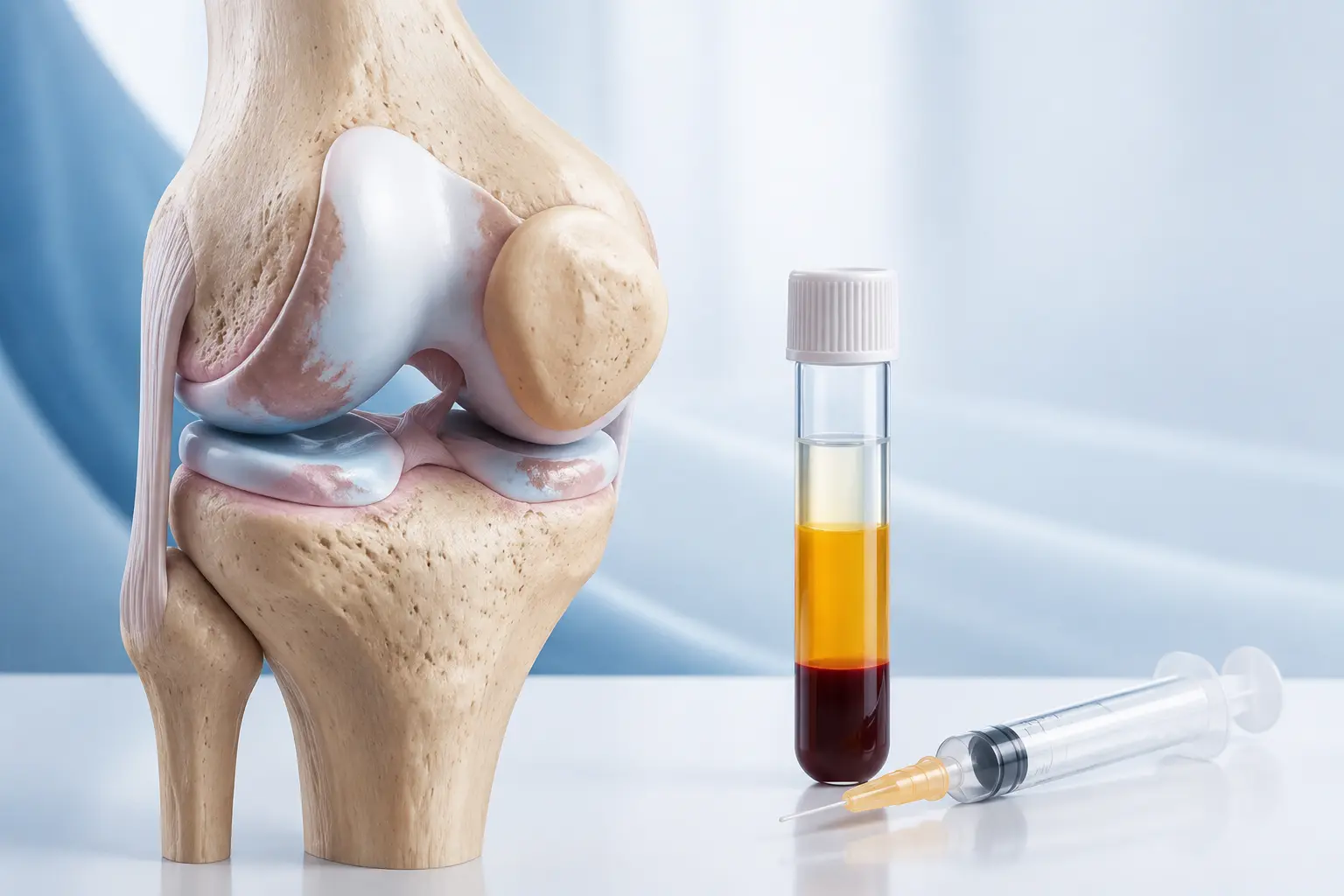
What is PRP?
PRP stands for platelet-rich plasma. A small amount of blood is drawn and centrifuged to concentrate platelets and proteins involved in healing and inflammation regulation. The prepared material is then injected into the knee joint under sterile conditions.
Because the material comes from the patient’s own blood, it is not a synthetic medication or a stem-cell treatment. Preparation methods differ, so platelet concentration and PRP composition are not identical across clinics and studies. This variation is one reason the literature is not completely consistent.
Who may benefit?
PRP is generally considered for patients with symptomatic mild to moderate knee osteoarthritis, activity-limiting pain and only partial improvement with physiotherapy, activity modification, weight management or medication. It may be an option for those seeking symptom relief and wishing to postpone surgery, provided they understand that response is not guaranteed.
When arthritis is end-stage, with major deformity, pain at rest and substantial limitation, PRP is less likely to provide meaningful benefit. In that setting, it is important to consider whether joint replacement offers a more predictable solution.
What does the literature show?
AAOS guidance states that PRP may reduce pain and improve function in symptomatic knee osteoarthritis, although the strength of recommendation is limited. Recent meta-analyses of randomized trials have found clinically relevant improvements in pain and function at some follow-up points, sometimes lasting up to a year. Other studies show smaller effects, and protocols vary in preparation, number of injections and arthritis severity.
In practical terms, PRP is a reasonable option for selected patients, but it is not a miracle treatment. There is no convincing evidence that it rebuilds lost cartilage or reliably stops progression of osteoarthritis.
How is treatment performed and what are the side effects?
After blood collection and preparation, the PRP is injected, with ultrasound guidance when appropriate. Temporary pain or swelling may occur during the first few days. Infection is rare, but every joint injection requires sterile technique. Medication—especially blood thinners—and any blood disorder or active infection should be reviewed beforehand.
The number of injections varies by protocol and clinical condition. A short period of reduced activity is commonly advised, followed by gradual return to exercise. PRP is most useful as part of a broader plan that includes strengthening, appropriate activity and weight management.
The purpose of PRP is to reduce pain and improve function for a period of time—not to replace worn cartilage or eliminate the possibility of future surgery for every patient.
This article provides general information and does not replace an examination, diagnosis or individual medical advice. Treatment is tailored to the patient’s condition, examination and imaging.